Richard “Dick” Davidson, the former chairman and chief executive officer of Union Pacific Railroad who helped shape the modern railroad by expanding its footprint and advancing its technology, has died at the age of 84.
“Dick dedicated his life to railroading, working his way up from brakeman to CEO,” said Union Pacific CEO Jim Vena. “He loved this industry, believed in railroaders and set a standard for leadership that still guides Union Pacific today. We mourn his loss and extend our deepest condolences to his family and friends.”
Davidson was born on Jan. 9, 1942, in Allen, Kansas. Raised on a family farm by his mother after his father's death when Davidson was six years old, he learned early the values of self-reliance and hard work. To help pay for college, Davidson signed on as a part-time brakeman for the Missouri Pacific Railroad, launching what would become a lifelong career in railroading.
After graduating from Washburn University with a Bachelor of Arts degree, Davidson accepted a position in Missouri Pacific's management training program and rapidly rose through the organization. He continued climbing the ranks, serving as assistant general manager in Kansas City and becoming vice president of operations in 1976.
When Union Pacific merged with Missouri Pacific in 1982, Davidson became vice president of operations for the combined railroad. He served in a succession of expanding leadership roles before being elevated to president and CEO of Union Pacific Railroad in 1991. He was named chairman and CEO of Union Pacific Corporation in 1997.
During his tenure, Davidson oversaw the acquisitions of Chicago & North Western Railway and Southern Pacific Railroad. The Southern Pacific merger nearly doubled the size of Union Pacific and expanded the railroad's reach in the West and South, but absorbing the struggling railroad created operational challenges. Davidson responded with major investments in capital projects, modernizing the company's technology infrastructure and decentralizing operations. Union Pacific emerged stronger, and the operational framework Davidson put in place endured long after his retirement.
Davidson's contributions to American industry were widely recognized. He was inducted into the Horatio Alger Association of Distinguished Americans, named to the Kansas Business Hall of Fame and the Nebraska Business Hall of Fame, and honored as Kansan of the Year by the Native Sons and Daughters of Kansas. He also received an honorary doctorate from Washburn University.
In addition to his positions at Union Pacific, Davidson served as chair of the Greater Omaha Chamber of Commerce, a director at Creighton University, and a member of the boards of the Kroger Company, the Boy Scouts of America, and the Capitol Visitors Center. He also served as chairman of President George W. Bush's National Infrastructure Advisory Board.
Davidson, who lived in Naples, Florida, with his wife Trish, was a loving husband, father and grandfather. A celebration of life will be held at a future date.
 CN (TSX: CNR) (NYSE: CNI) announced today that propane export shipments from South Beamer, Alberta to Watson Island, British Columbia reached an all-time monthly record for the corridor in May, while staying within the existing commercial arrangements.
The achievement represents an increase in carloads of 40% compared to May 2025 and beating CN’s previous monthly record from August 2024, reflecting continued operational improvements across the supply chain. CN’s record-setting performance was supported by train length optimizations, enhanced network efficiency, and strong execution across the corridor, enabling greater volumes of product to move reliably to the West Coast.
CN’s focus on service consistency and asset utilization continues to create additional capacity, to support customer growth opportunities. As demand for Canadian propane exports remains strong, CN remains committed to working closely with Pembina and supply chain partners to provide safe, efficient, and reliable transportation solutions.
 Canadian Pacific Kansas City (TSX: CP) (NYSE: CP) (CPKC) said today it has broken its May monthly record for transporting Canadian grain and grain products, moving 2.9 million metric tonnes (MMT) in May 2026.
The new May achievement beat the previous tonnage record set in May 2020. Last month’s 30,324 carloads also set a new May monthly record, beating the previous high set in May 2020.
CPKC previously set records for the movement of Canadian grain in the first quarter and set monthly records in four of the first five months of 2026. Monthly records earlier this year have been set in January, February, and April.
Through Week 43 of the 2025-2026 crop year, CPKC transported more than 25.3 MMT of Canadian grain and grain products. These are the largest Canadian grain totals since the record setting 2020-2021 crop year.
This crop year, the volumes of Canadian grain and grain products moving on the CPKC network in multiple weeks exceeded the average supply chain capacity targets outlined in CPKC’s annual grain service plan. It is critical that all supply chain participants, including customer loading facilities and terminal operators loading grain into vessels at ports, operate at full capacity to sustain this strong momentum.
 DHL eCommerce announced a new exclusive multi-year contract with the United States Postal Service (USPS) for last-mile parcel delivery services in the U.S.
At an expected value well over $10 billion (USD), the agreement is unprecedented in the 25-year DHL eCommerce-USPS relationship and positions both organizations for long-term competitive success.
Strengthening the USPS relationship helps DHL eCommerce capitalize on accelerating e commerce trends, and expand in the U.S. market over the next several years through its domestic and international services.
DHL eCommerce handles nationwide pickup, sortation across its 19 fully automated hubs, and linehaul on its air and ground network before partnering with USPS to complete the final mile for all deliveries. The company taps into the Postal Service's unmatched final-mile network, which reaches more than 41,550 ZIP Codes and more than 170 million delivery points six days a week.
"This agreement creates a dependable, long-term platform for our customers," said Scott Ashbaugh, CEO of DHL eCommerce Americas. "Working with USPS allows us to serve communities nationwide in a highly efficient way, minimizing additional vehicles on the road and supporting our commitment to reducing emissions. Postal Service carriers are trusted members of the communities they serve, and we're proud to partner with an organization that shares our focus on reliability, transport safety, and public service."
"Today marks an exciting milestone in the evolution of our relationship with DHL eCommerce," said Postmaster General and CEO David Steiner. "This extended and exclusive agreement reflects a shared commitment to innovation, operational alignment, and delivering greater value to the shipping marketplace. By aligning more closely with our transformed network, we are creating a stronger, more efficient last-mile solution that expands customers' access to the Postal Service's unmatched reach. Together, we are building a more flexible, market-responsive model that enhances reliability, supports growth, and positions both organizations for long-term success."
Backed by the world's largest logistics company, DHL Group, DHL eCommerce is a leading player in the U.S. domestic and export e-commerce parcel market. Its network and state-of-the-art technology have been refined over decades to focus exclusively on the needs of the medium-to high-volume B2C online retailers, delivering reliable, affordable, and sustainable service.
 BLG LOGISTICS has once again had its climate targets officially validated by the Science Based Targets initiative (SBTi)—with significantly more ambitious reduction targets than those set during the initial validation in 2020.
The targets for Scope 1 and 2 are consistent with the 1.5°C pathway of the Paris Agreement.
Specifically, BLG LOGISTICS has committed to reducing direct greenhouse gas emissions from its own business operations—such as those from vehicles, facilities, and energy consumption at its sites (Scope 1 and 2)—by 50.4 percent in absolute terms by 2030 compared to the base year of 2018. For indirect emissions along the entire value chain that are not directly caused by BLG itself but arise, for example, from suppliers or contracted transport (Scope 3), the validated reduction target is 30 percent over the same period. This target also includes land-use-related emissions as well as sequestration from biogenic raw materials.
With its renewed SBTi validation, BLG LOGISTICS is consistently advancing its own climate strategy. Going forward, climate measures will be managed entirely in line with the science-based reduction targets validated by the SBTi. In doing so, the company is strengthening the transparency and credibility of its climate protection activities. The SBTi validation focuses on absolute emissions reductions across the company’s own operations and value chain, thereby providing an internationally recognized framework for the further development of the decarbonization strategy.
Christine Hein, Chief Financial Officer and Head of Sustainability at BLG LOGISTICS, explains: “For us, SBTi validation is more than just a milestone—it sends a clear signal to customers, partners, and capital markets: We are committed to science-based and measurable climate targets. This builds trust and lays the foundation for sustainable value creation. For me, it’s clear: True decarbonization is an investment in the future viability of our company and not just a cost factor.”
The Science Based Targets initiative is an internationally recognized initiative that helps companies set science-based climate targets consistent with the Paris Agreement. SBTi validation confirms that the submitted targets are consistent with the latest scientific findings on limiting global warming.
By 2025, BLG LOGISTICS had already reduced its own emissions (Scope 1+2) by 45.3 percent compared to the base year of 2018. Emissions along the value chain (Scope 3) fell by 19.5 percent over the same period.
The roadmap to decarbonization focuses on five key levers: renewable electricity and heat supply, the use of alternative drive systems and fuels, the consistent improvement of energy efficiency, and raising employee awareness of the conscious use of resources in their daily work.
 FedEx Corp. (NYSE: FDX, “FedEx”) today announced the completion of its spin-off of FedEx Freight Holding Company, Inc. (NYSE: FDXF, “FedEx Freight”), establishing FedEx Freight as an independent, publicly traded company and focused leader in the North American less-than-truckload (LTL) industry.
FedEx Freight common stock will begin “regular way” trading today on the New York Stock Exchange (“NYSE”) under the ticker symbol “FDXF.” FedEx will continue to trade on the NYSE under the ticker symbol “FDX.”
“The successful separation of FedEx Freight is a pivotal milestone, positioning two independent companies to lead their respective industries and create long-term value for their stockholders,” said Raj Subramaniam, FedEx president and chief executive officer. “Today’s spin-off positions FedEx Freight to build on its market-leading scale and a customer-focused culture, and advances the next chapter for FedEx as the industrial network that helps power the global economy.”
The spin-off was achieved through the distribution by FedEx of 80.1% of the outstanding shares of FedEx Freight’s common stock on a pro rata basis to the holders of FedEx common stock. Each FedEx stockholder received one share of FedEx Freight common stock for every two shares of FedEx common stock held of record as of the close of business on May 15, 2026. Stockholders will receive cash in lieu of fractional shares of FedEx Freight common stock.
FedEx retained 19.9% of the outstanding shares of FedEx Freight common stock. FedEx will dispose of such shares within 24 months of the completion of the separation through one or more subsequent exchanges in repayment of certain FedEx debt held by FedEx creditors and/or through distributions to stockholders of FedEx as dividends or in exchange for outstanding shares of FedEx common stock.
Goldman Sachs & Co. LLC and J.P. Morgan Securities LLC served as the financial advisors, and Skadden, Arps, Slate, Meagher & Flom LLP served as legal counsel.
 The International Maritime Organization (IMO) has adopted a new International Code of Safety for Maritime Autonomous Surface Ships (MASS Code) to support the safe integration of AI-enabled and remotely operated commercial ships into global shipping.
The MASS Code sets out a comprehensive, goal-based framework to ensure that remotely controlled or autonomous ships are designed and operated to a level of safety, security and environmental protection that is expected of a conventional ship. They will also be required to comply with the International Convention for the Safety of Life at Sea (SOLAS) and other applicable mandatory IMO instruments.
The Code applies to cargo ships* and will take effect from 1 July 2026. As it is a non-mandatory instrument, Member States are given the opportunity to test its use while paving the way for making it mandatory under the SOLAS Convention.
Welcoming the milestone at the conclusion of the 111th session of the Maritime Safety Committee (MSC) in London, held 13 to 22 May, IMO Secretary-General Mr. Arsenio Dominguez said: “This landmark achievement positions IMO at the forefront of regulating emerging technologies, demonstrating the Organization’s ability to anticipate and shape the future of shipping. It represents a major step forward, enabling innovation while ensuring that safety, accountability and the human element remain at the core of maritime operations.”
A ship is considered autonomous if such shipboard technology is designed and verified to control actions without human intervention. While the number of fully crewless or remote-operated ships are currently limited, a growing number are being successfully trialled internationally.
The MASS Code introduces new requirements for the design, approval and operation of these ships, including in key areas such as navigation, connectivity, remote operations, fire safety, and search and rescue. It places strong emphasis on risk assessment, robust system design, cybersecurity and the integration of Remote Operations Centres (ROCs).
Importantly, it underscores the importance of human oversight, with the master retaining overall responsibility for the ship at all times – even if not on board the ship.
The new MASS Code supplements existing IMO instruments, taken due account of the international law, including the United Nations Convention on the Law of the Sea (UNCLOS). It is the culmination of nearly a decade of multilateral discussions, legal work and on-the-water trials, to enable new and conventional technologies to operate safely together.
The next steps for the Code include: December 2026 – MSC 112 to re-establish MASS Working Group for the Development of a framework for an Experience-Building Phase (EBP) of the non-mandatory MASS Code; 2028 - Development of the mandatory MASS Code, based on the non-mandatory Code and results from the EBP and review conducted by the relevant sub-committees. Consideration of amendments to SOLAS (new chapter) for the Code's adoption;
By 1 July 2030 - Expected adoption of the IMO’s first mandatory MASS Code, for entry into force on 1 January 2032.
In addition to the new MASS Code, the Maritime Safety Committee took the following key decisions: The Committee adopted a resolution requesting the support of IMO Member States for the Secretary-General's ongoing efforts to facilitate the safe evacuation of ships and seafarers trapped in the Persian Gulf.
The Committee urged Member States and organizations to assist trapped seafarers by providing essential supplies, establishing helplines and remote support, and keeping families informed. Crew changes were also encouraged.
The Committee requested the Secretary-General to closely monitor the situation and provide regular updates to Member States and relevant IMO bodies.
The Committee continued work on the safety regulatory framework for ships using new technologies and alternative fuels. It approved new Interim guidelines for use of ammonia cargo as fuel, to support the safe design, construction and operation of ships carrying and using ammonia as fuel.
The Committee approved two new sets of interim guidelines for training seafarers on ships using alternative fuels and technologies, reflecting the need to develop new skills while addressing the specific risks of each fuel type. These include: Interim guidelines on training for seafarers on ships using methyl/ethyl alcohol as fuel; and Interim guidelines on training for seafarers on ships using ammonia as fuel.
The Committee also clarified how the “one ship, one code” principle applies to gas carriers using alternative fuels, including whether the IGF Code or IGC Code should apply, improving consistency and clarity in the regulatory framework.
The Committee approved amendments to the SOLAS Convention that would change how the Long-Range Identification and Tracking (LRIT) system works, with the aim of making global ship tracking data easier to access, and improve safety, security and environmental protection at sea. The amendments will be considered for adoption by MSC 112 in December.
The amendments will allow coastal States to receive standard ship position reports free of charge, removing a major barrier to using the system. This is expected to help countries better monitor maritime activity, support search and rescue operations, and respond to issues such as illegal shipping and marine pollution.
LRIT is a worldwide system that allows governments to track ships by receiving regular updates on their position and identity.
The Committee adopted a resolution to introduce the VHF data exchange system (VDES) into the IMO regulatory framework, as an alternative to the current AIS tracking system current required of ships. The new regulations are expected to enter into force on 1 January 2028.
VDES is a more advanced version of AIS that allows ships and coastal authorities to send and receive more data, more quickly and more securely. VDES is designed to make ship tracking more secure by adding authentication, helping to reduce the risk of spoofing.
The Committee also adopted revised Performance standards for shipborne VDES and approved Guidelines for the onboard operational use of shipborne VDES.
The full meeting summary will be made available in due course.
 Crowley mariners who served aboard the U.S.-flagged tanker Stena Immaculate were honoured with the U.S. Maritime Administration’s (MARAD) Gallant Ship Award during the U.S. Department of Transportation’s National Maritime Day observance in Washington, D.C.
The award, one of the maritime industry’s highest distinctions, recognizes the 23-member crew’s extraordinary professionalism, courage and commitment to safety.
The award recognizes the crew’s actions during a March 10, 2025, allision in the North Sea, when the anchored vessel was struck by an oncoming ship off the coast of Hull, United Kingdom. Despite significant danger, the crew responded with discipline and coordination, ensuring their safe evacuation without serious injury and helping prevent more severe damage to the vessel, its cargo and the environment.
“This honor for the crew of the Stena Immaculate underscores the essential role that U.S. mariners play in safely sustaining supply chains and supporting national defense at home and abroad,” said James C. Fowler, executive vice president and division president, Shipping & Logistics at Crowley, who spoke at the May 22 event. “The bravery and immediate response of these 23 professional mariners saved lives and prevented catastrophic damage to the environment. Their extreme courage and professionalism embodied the highest ideals of U.S. maritime.”
At the time of the incident, the tanker was managed by Crowley through its joint venture with Stena Bulk AB. It was transporting jet fuel under charter to the U.S. Navy’s Military Sealift Command and operating in MARAD’s Tanker Security Program.
Established in 1944, the Gallant Ship Award recognizes ships and crews for outstanding bravery and seamanship during emergencies at sea. It is given in times of unique achievement, the last time in 2019.
 One of TCE’s unique services as a specialist air cargo operations and compliance partner, is its specialised auditing team which is always on hand to support airlines in maintaining high operational, quality, and security standards across their network.
TCE has become an established audit provider in the air cargo industry in recent years, both for routine compliance topics as well as more specialised validation requirements. Its audit portfolio encompasses a range of assessments including regular station inspections, station opening audits, ACC3 pre-validation audits, ACC3 compliance checks, and ACC3 validations which are carried out together with certified independent EU and UK validators. Audit schedules are tailored to each airline’s requirements and operational priorities. While audit planning is often risk-based given the fragmented and changing nature of the air cargo industry’s supply chain, audits are generally performed at least every two years.
In outsourcing audits to TCE, airlines save significantly on travel costs and internal staffing reallocation. Instead, they can rely on TCE supplying a full audit oversight, following an in-depth assessment of the station in question.
“At TCE, our goal is to provide airlines with reliable, efficient, and fully compliant audit solutions, ensuring the highest operational, quality and security standards across the network,” Salvatore Bernardo, Quality Safety and Security (QSS) Manager & Special Projects, Manager of TCE, explains. “Our audits go beyond routine checks. They give a structured review of processes, documentation, handling procedures and safety compliance, to warrant alignment with airline and regulatory requirements.”
Most audits take between one and two days, with the exact duration depending on the audit scope, the operational size of the station, and the risk level involved. They are mainly conducted onsite, though remote execution is also possible in certain situations. TCE-certified auditors meticulously assess all required points and share the results with the audited station and the airlines operating there, so that all relevant stakeholders have visibility into findings and compliance status.
TCE also manages audit follow-ups through its Quality Management System, which tracks corrective action reports and sets defined closure deadlines. This creates a clear path from audit findings to remediation.
The TCE auditing team currently consists of four auditors, all of whom have received Aviation Auditor Training and hold additional, relevant qualifications from certified training providers. Regular refresher training, on-the-job feedback from lead auditors, and guidance from EU and UK validators ensure that each auditor is kept up to date of the latest requirements. In addition, they monitor developments from industry authorities and regulatory bodies such as IATA, ICAO, IOSA, EASA, TSA, CBP, and CBSA.
“Our team of TCE-certified auditors is on hand throughout the year,” says Sarah Scheibe, Managing Director of TCE. “With a TCE audit, an airline can be certain that compliance and operational quality have been fully assessed, any weak points subsequently calibrated, and full control restored and maintained. Auditing done through TCE gives airlines flexibility and peace of mind, as it avoids having to temporarily reallocate limited staff to other stations, and each audit is carried out by professional, impartial auditors.”
 Bethany Windsor, Logistics UK’s Head of Skills Policy and Generation Logistics commented: “Today’s publication of the interim Milburn Report makes sobering reading about the prospects for the next generation, particularly the scale of the rise in young people who are NEET (Not in Employment, Education or Training.)
“For sectors like logistics, this is also a moment of opportunity. Apprenticeships, traineeships and initiatives such as @Generation Logistics play a crucial role in opening up pathways for young people who may never have considered a career in the sector. They provide not just entry routes into work, but clear progression, practical skills and long-term careers in a sector that underpins the whole economy.
“The focus now needs to be on ensuring that the skills system is responsive, joined up and aligned with employer need. Reform that strengthens technical routes, improves careers awareness, and makes it easier for employers to engage will be essential if we are to connect more young people with meaningful opportunities.
“Getting this right is not just about social mobility; it is fundamental to the long-term resilience and productivity of the UK’s logistics workforce.”
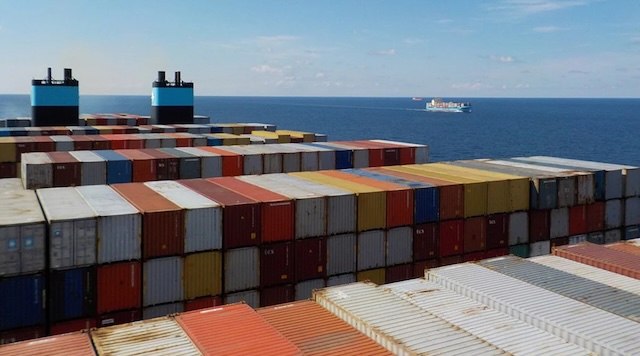 A.P. Moller – Maersk (Maersk) has announced the launch of FI2, a new dedicated ocean service connecting Far East Asia to the Indian Subcontinent, with the first Westbound sailing departing Shanghai on June 4th, 2026.
The service has been introduced in direct response to growing customer demand for additional capacity on the China–India trade route and will provide Indian importers and exporters with a quicker, reliable, high-frequency connection to key manufacturing and sourcing hubs across North West India.
The weekly service will be operated with a fleet of six vessels with a nominal capacity of 4,500 TEU. The port rotation will be Shanghai – Ningbo – Nansha – Tanjung Pelepas – Nhava Sheva – Pipavav – Port Qasim.
A defining feature of the FI2 service is its call at Pipavav on India's northwestern coastline in Gujarat. Pipavav serves as a gateway to the Dedicated Freight Corridor (DFC) rail network, enabling Maersk to offer customers a seamless, integrated logistics solution beyond the port gate. Through DFC rail connectivity, cargo arriving at Pipavav can be efficiently transported inland to the National Capital Region (NCR), including Delhi, Gurugram, Noida, and the surrounding industrial belts. This reduces transit times and ensures reliable delivery to the destination. This makes FI2 particularly compelling for customers moving high-value and time-sensitive cargo in automotive, chemicals, retail, and technology verticals who require dependable, door-to-door supply chain solutions.
"The FI2 is a direct response to what our customers want: more capacity, consistency, and connectivity, on the China-India route. By combining the weekly ocean service with our rail solution via the DFC, we are going a step further and giving our customers the true integrated logistics experience." Thomas Theeuwes, Managing Director, Maersk South Asia.
The FI2 service joins Maersk’s existing FI3 service, together forming two direct Far East – India ocean services. Together, they deliver improved frequency options, greater routing flexibility, and enhanced resilience, ensuring customers can better plan and protect their supply chains from disruption.